Meet Our Head of Sales for UK and Europe, Peter Ball

  • Name – Peter Ball
  • Job Role – Head of Sales
  • How long been with the company –
    I’m the new boy having joined Austco Europe in March 2024!
  • Employment background –
    Previously with Static Systems for many years.  Throughout my career I have been engaged on countless hospital projects across the UK and internationally.  I always feel privileged to work with each client team and delivery partners from early project inception and business case, through design and construction to the operation of their healthcare facility. 

    Austco has a global reputation for excellence in clinical communications, workflow, and advanced nurse call;  I’m absolutely thrilled to join the European Team and looking forward to helping customers discover how our innovative solutions make a real difference to patient experience and wellbeing of caregivers.

  • Hobbies and Interests –
    Walking, nature, and the outdoors.  DIY.  Running (slowly!).  Golf (aka attempting to hit a small white ball with a stick!).  Motorsport.
All News and Events

Partner Training

More training was carried out for one of our Partners today (Virtus Security) at our offices in Bromsgrove, so increasing their knowledge and understanding of our systems. 

All News and Events

Workflow is not enough anymore: why your nurse call system must connect to your EMR.

In the rapidly evolving healthcare sector, innovation and efficiency drive significant changes in patient care delivery. Traditional workflows, once the cornerstone of hospital operations, are now being reevaluated and upgraded in the face of technological advancements. The integration of nurse call systems with Electronic Medical Records (EMR) exemplifies this shift, heralding a new era in healthcare where technology doesn’t just support but actively enhances every aspect of patient care. This move towards a more interconnected and technologically integrated healthcare environment promises to streamline operations, improve patient outcomes, and elevate the overall standard of care.

The Evolution of Healthcare Needs

The healthcare landscape has transformed, driven by increased patient volumes and expectations for quality care. Traditional workflows, reliant on manual processes and isolated systems, must be equipped to meet these modern demands, highlighting the need for a more integrated approach.

The Limitations of Traditional Workflows

The inefficiencies of traditional workflows, such as delayed information transfer and fragmented patient records, can lead to significant patient care delays and increased error potentials, underlining the critical need for enhanced workflow solutions.

The Power of EMR Integration

Integrating nurse call systems with EMR is transformative, creating a cohesive ecosystem where patient calls serve as gateways to comprehensive, contextual information, ensuring timely and informed care.

Improving the Patient Experience through Integration

Integrating nurse call systems with EMR plays a pivotal role in enhancing the patient experience, directly impacting HCAHPS scores and other patient satisfaction metrics:

    • Accurately Monitor Rounding Compliance: Integration facilitates precise monitoring of rounding compliance, ensuring regular patient checks and adherence to care best practices.
    • Streamline Communication Channels: By simplifying communication channels, integration enables direct, efficient information exchange between caregivers and the EMR, enhancing care coordination.
    • Record Pain Checks and Other Care Initiatives: The system allows for documenting pain assessments and care initiatives directly into the patient’s EMR, promoting a consistent and coordinated approach to pain management.
    • Push Data with a Single Button: Integration allows updating patient charts with a single button push, streamlining documentation and ensuring real-time data accuracy.
    • Indicate Staff Presence and Patient Risks: Advanced features like over-door lights can signal staff presence or highlight patient risks such as fall hazards, improving staff awareness and patient safety.

The Tangible Benefits of Integration

Integrating nurse call systems with Electronic Medical Records (EMR) brings tangible benefits that significantly enhance healthcare delivery. One of the most notable advantages is the drastic improvement in response times and patient safety. This synergy allows healthcare professionals to access critical patient data instantly, enabling swift action in emergencies and enhancing patient care and safety. Furthermore, this streamlined access to information significantly boosts staff efficiency by reducing manual data entry and administrative burdens, allowing more time for direct patient care.

Moreover, the integration positively impacts job satisfaction among healthcare workers by simplifying daily tasks and providing easy access to necessary patient information. This improvement in the work environment leads to higher quality care and contributes to a more positive healthcare setting. Additionally, the seamless flow of information fosters more informed decision-making and supports personalized care approaches. Healthcare providers can tailor treatments to individual patient needs, improving outcomes and patient satisfaction. This holistic enhancement of healthcare processes underscores the critical role of integrating nurse call systems with EMR in modern healthcare facilities.

The Future of Healthcare: Integration as the New Standard

The future of healthcare is set to embrace integration as its new standard, marking a transformative shift towards a more interconnected and responsive ecosystem. Integrating nurse call systems with Electronic Medical Records (EMR) is merely the beginning of this extensive transformation, which aims to streamline workflows and enhance patient outcomes holistically. Innovations such as artificial intelligence (AI), machine learning, and the Internet of Medical Things (IoMT) will be at the forefront of this evolution, providing predictive insights, automating routine tasks, and delivering personalized care at unprecedented levels.

As we move forward, the automation of processes based on inputs from EMR, IoMT devices, beds, telemetry, and other passive events (those not initiated by patients or the care team) will become increasingly central to healthcare delivery. This automation will reduce the manual effort required in monitoring and managing patient care and significantly improve the accuracy and timeliness of interventions. By leveraging data from a wide array of sources, healthcare providers can anticipate patient needs, adjust treatments in real-time, and prevent adverse events before they occur.

This shift towards an integrated healthcare ecosystem will foster a more efficient, patient-centric model adaptable to the evolving demands of society. It sets a new benchmark for excellence in healthcare delivery, ensuring that every component of the healthcare system works in harmony to support optimal patient outcomes.

In Conclusion: Embracing the Imperative for Change

Integrating nurse call systems with Electronic Medical Records (EMR) is a pivotal response to the evolving demands of modern healthcare. It represents a shift towards a more efficient, secure, and patient-focused model of care, addressing the urgent need for facilities to adapt and thrive in a complex healthcare environment. This integration is far from a mere enhancement; it’s a fundamental change imperative for providing top-notch care in today’s fast-paced world.

As we face an era of increased patient expectations and a push for greater operational efficiency, the integration of these systems is not just advantageous—it’s critical. It ensures that healthcare providers meet current needs while laying a solid foundation for future technological advancements. This commitment to innovation and improvement in patient care and workflow efficiency will distinguish leading healthcare facilities in the years to come.

By integrating nurse call systems with EMR, healthcare facilities are enhancing their current operations and paving the way for a future where excellence in patient care and operational efficiency are inextricably linked.

All News and Events

Modular Buildings

Introduction

Modern Methods of Construction (MMC) represent a significant evolution in the construction and procurement landscapes. As industries across the globe, including healthcare, continue to grapple with challenges like limited budgets, the need for reliable suppliers, and time-consuming procurement processes, MMC has emerged as a promising solution. This method encompasses a range of innovative construction techniques, such as modular building and the integration of advanced systems like Nurse Call Systems, that aim to improve efficiency, reduce costs, and enhance the quality of the final product. This blog post delves into the impact of MMC on suppliers and customers, particularly within the context of healthcare procurement, exploring its implications for the industry.

Understanding the Essence of Modern Methods of Construction

Modern Methods of Construction (MMC) encapsulate a plethora of practices designed to revolutionise the building process. Encompassing techniques like modular building and the incorporation of sophisticated systems, including Nurse Call Systems, MMC seeks to redefine efficiency and sustainability in construction. By leveraging prefabrication and other innovative approaches, parts of a structure can be produced off-site in a controlled factory environment and later assembled on location. This methodology stands in stark contrast to traditional construction practices, which are often plagued by extended durations and heightened risk of budgetary excesses. Through MMC, the construction industry is witnessing a transformative shift towards minimising on-site labour, reducing waste, and significantly curtailing the time frame from conception to completion. This streamlined approach not only aligns with the pressing demands for quicker and cost-effective construction solutions but also promotes environmental sustainability and energy efficiency, heralding a new era in the construction sector.

The Economic Implications of MMC for Suppliers

The shift towards Modern Methods of Construction presents both significant opportunities and challenges for suppliers within the construction industry. On one hand, the growing demand for modular building components and advanced systems, such as Nurse Call Systems, opens up novel avenues for business expansion. Suppliers poised to meet these needs with MMC-compatible products stand to carve out a substantial niche in this evolving market landscape and benefit from improved project turn-around and the financial benefits that comes with that. On the other hand, transitioning to cater for the MMC market demands substantial initial investments in cutting-edge technologies and the reconfiguration of manufacturing processes to align with the principles of modularity and prefabrication. This transition is not merely about adopting new manufacturing techniques but also involves a strategic shift towards innovation and sustainability. Suppliers who are agile enough to navigate this shift can forge durable partnerships with construction firms and healthcare providers, tapping into a continuous stream of demand. However, this evolution is contingent upon their capacity to uphold stringent quality standards and reliability, traits that are critically valued in the MMC sphere.

Quality and Reliability in the Age of MMC

The hallmark of Modern Methods of Construction lies in its capacity to elevate standards of quality and reliability across the construction spectrum. This is particularly pronounced in the production environment of MMC, where components are manufactured under stringent quality controls. Such an environment facilitates a meticulous attention to detail, significantly diminishing the likelihood of errors that are more common in traditional construction settings. This rigorous control extends to the integration of complex systems like Nurse Call Systems, ensuring they meet the exacting requirements necessary for healthcare infrastructure. The emphasis on quality is further bolstered by the standardisation of parts and processes, which not only aids in maintaining high standards but also contributes to the reliability of the final construct. This systematic approach to building fosters a level of consistency and dependability scarcely seen in conventional methods, presenting a compelling case for the adoption of MMC in sectors where quality and reliability are paramount.

How MMC Is Streamlining the Procurement Process

The adoption of Modern Methods of Construction is significantly transforming the procurement landscape, especially for those within the healthcare sector. The methodology underpinning MMC introduces a level of efficiency and predictability previously unattainable through traditional construction routes. This efficiency primarily stems from the ability to conduct multiple construction phases concurrently, thanks to the prefabricated nature of components. Such an approach markedly shortens project durations and provides a clear, upfront understanding of costs, alleviating common procurement headaches related to budget overruns and scheduling conflicts. Additionally, the integration of sophisticated technologies into these components, such as Nurse Call Systems, further streamlines the procurement process. It offers healthcare facilities a streamlined, comprehensive solution that addresses specific operational needs without the complexity of coordinating multiple suppliers and installations. This evolution in construction and procurement practices underscores a paradigm shift towards more strategic, cost-effective, and time-sensitive project execution, aligning closely with the pressing needs of the modern healthcare infrastructure landscape.

All News and Events

System Demonstrations

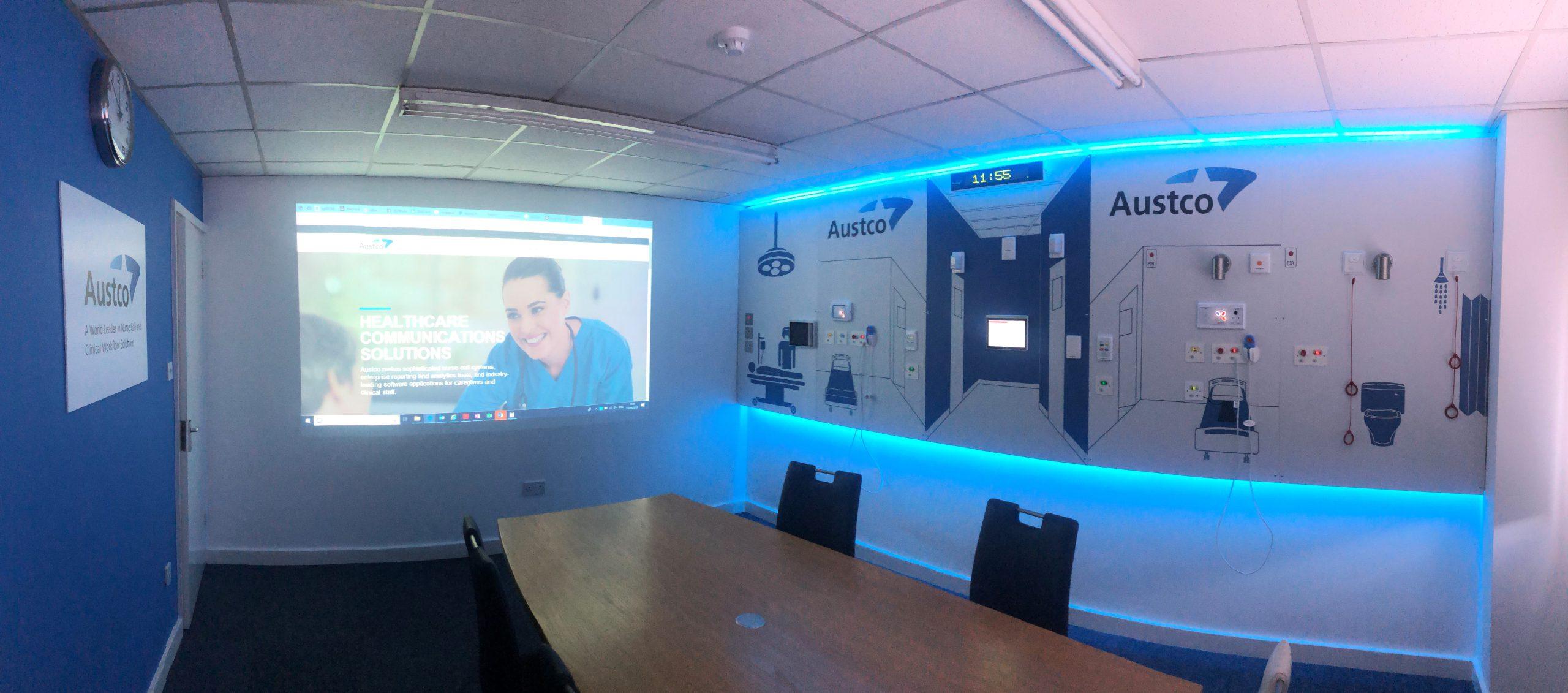
Austco’s technical capability means that we can demonstrate even some of the most advanced features of the Tacera system in a live environment, whether that is onsite using our Demo Case, in person in our Offices, or live via Teams or Zoom at our Remote Demonstration Facilities. To book your demonstration with the UK / Europe Team click here

All News and Events

New strategic partnership between Aamal Medical and Austco Healthcare

Austco Healthcare is pleased to announce its new partnership with Aamal Medical, based in Qatar. 

By combining Aamal Medical’s 50 years of experience in providing comprehensive healthcare solutions with Austco Healthcare’s 30 Years of delivering leading healthcare communication solutions, this partnership is set to transform care delivery in Qatar. 

Read the full media release here: Aamal Medical’s Partnership Austco Healthcare – Eng

All News and Events

Revolutionizing Care: The Evolution and AI Future of Nurse Call Systems

Introduction to Nurse Call Systems

In the dynamic healthcare landscape, nurse call systems have become a lifeline, connecting patients with their caregivers. These systems have evolved from simple buzzers to complex, integrated networks as crucial to healthcare as the stethoscope. Let’s take a closer look at their evolution, the current state, and the innovative future that beckons.

The Evolution of Nurse Call Systems

The nurse call system began as a straightforward alert mechanism—a bell or a buzzer that, when activated, signified a need for assistance. Nurses of yesteryear remember these systems as nothing more than a signal to initiate a search for the patient in need.

However, as technology seeped into healthcare’s every pore, these systems underwent a significant transformation. They have become advanced communication networks that provide alert and critical information about the caller’s identity, location, and potential needs.

The Present: A New Era of Nurse Call Systems

Today, nurse call systems are indispensable in healthcare settings. They have become multi-functional devices that interlace with other hospital systems, like Electronic Medical Records (EMR), to provide a comprehensive picture of a patient’s situation at a moment’s notice. These systems enhance the efficiency of healthcare delivery by directing caregivers to the point of need with precision and speed.

Modern nurse call systems also incorporate analytics, allowing healthcare teams to optimize workflows and manage resources effectively. They’ve transitioned from simple alert mechanisms to central hubs of patient-care communication.

The Future: AI’s Influence on Nurse Call Systems

Integrating Artificial Intelligence (AI) into nurse call systems is set to revolutionize nurse-patient interactions. AI’s influence could manifest in several ways:

    • Intelligent Call Triage: AI could urgently prioritize calls using voice analysis and patient history.
    • Predictive Alerts: AI might predict patient needs, enabling preemptive care.
    • Customized Patient Care: Tailoring nurse call systems to individual patient needs and patterns.
    • Enhanced Communication: Facilitating integration with EMRs for real-time data accessibility.
    • Voice-Activated Systems: Allowing patients to articulate needs verbally, interpreted, and directed by AI.
    • Automated Environmental Control: Adjusting room settings in response to a call, enhancing patient comfort.
    • Data-Driven Staffing Insights: Using call data for optimizing nurse staffing and resource allocation.

These advancements promise a future where nurse call systems not only react to patient needs but anticipate and respond to them in a more personalized and efficient way.

The Impact of AI on Nursing

Integrating AI into nurse call systems is not merely a technological upgrade; it’s a paradigm shift in nursing practice. Nurses will become data-informed decision-makers, using AI insights to prioritize care and interventions. Yet, amidst this technological revolution, nurses must continue to provide the empathy, compassion, and human touch that are the cornerstones of patient care.

Real-World Applications

Envision AI to predict patients’ pain management needs, allowing nurses to provide proactive care. Or, during a critical event, an AI system could deliver a patient’s vital information to the attending nurse and doctor for a coordinated and effective response. These are not futuristic fantasies but imminent realities.

Conclusion

The transformation from rudimentary alert systems to AI-enhanced networks reflects the significant advancements in nurse call systems. These innovations promise to bolster the quality of patient care and the efficiency of healthcare delivery. Yet, they also bring forth ethical considerations that must be balanced with the benefits.

The integration of AI in nurse call systems represents a new dawn for nursing—a future where technology is our ally, and together, we redefine the essence of caregiving.

Engaging the Community: Your Thoughts?

As we navigate this journey, your experiences and insights are invaluable. How do you see AI impacting nurse call systems and the broader nursing field? What excites you about these developments, and what concerns do you have? Share your thoughts, experiences, and visions with us – marketing@austco.com

All News and Events

Austco Healthcare presente en Medical Expo 6ta edición / Expo Guadalajara 2024

Visítanos en el evento más grande del sector salud que recibe a las mejores empresas de esta industria, especializadas en la fabricación, distribución y comercialización de equipo y dispositivos médicos.

No te pierdas nuestra participación como expositor en la feria de dispositivos médicos más grande de México. ¡Vive la experiencia Medical Expo 6ta edición!

Expo Guadalajara / GDL | 20, 21 y 22 de Marzo 2024

Obtén tu cortesía de ingreso *SIN COSTO* registrándote en el sig. link:

https://medical-expo.com.mx/expo/landings/AUSTCO-GDL

All News and Events

The Future of Healthcare Communication: IP Nurse Call Systems

In the healthcare industry, communication is not just important—it’s critical. The introduction of IP Nurse Call systems is a technological leap transforming the healthcare communications landscape. With features like central administration, integration with smart devices, and the ability to interconnect with other systems seamlessly, these systems are setting a new standard for efficient patient care. Let’s explore how IP Nurse Call systems are reshaping the future of healthcare.

Central Administration for Scalable Healthcare

IP Nurse Call systems function on a robust computer network where every component has a unique address, allowing for centralized control. This is especially advantageous for large healthcare facilities or enterprises that require scalability. Central administration means that as a healthcare facility grows, the nurse call system can easily expand, without compromising on efficiency or performance.

Seamless Connection with Smart Devices

The true power of IP technology is its ability to send alerts to various smart devices. Whether it’s a pager, a smartphone, or even using VoIP for direct communication between patients and caregivers, IP Nurse Call systems are at the forefront of utilizing modern communication methods. With apps available for both iOS and Android, caregivers can stay informed and responsive no matter where they are in the facility.

Integration with Other Systems

One of the standout features of IP Nurse Call systems is their ability to integrate with other clinical or building systems without the need for middleware. This integration can include Real-Time Location Systems (RTLS), fire and security systems, smart beds, electronic medical records (EMR/EHR), smart pumps, telemetry devices, and even patient infotainment systems. This level of integration ensures that the nurse call system is a hub of communication, not just a standalone solution.

Customized Responses to Different Call Types

IP Nurse Call systems can discern between various call types—whether a patient needs assistance going to the bathroom, requires water, or is experiencing pain. This intelligent differentiation allows for calls to be routed appropriately, ensuring that the right staff member responds in a timely manner. This specificity in communication helps streamline tasks and improves overall patient care.

Data Storage for Audits and Reporting

With IP Nurse Call systems, every piece of data—from alarm times and locations to the type of call and response times—is captured and stored in a database. This data is invaluable for audits and reporting, allowing healthcare administrators to analyze and optimize response strategies and staff performance.

IT-Friendly Deployment

Deployment of an IP Nurse Call system is designed to be IT-friendly, often requiring just virtual servers and standard network switches. A well-designed system should minimize the need for multiple servers and operate on standard, managed network infrastructure, simplifying deployment.

Future-Proofing Your Investment

The beauty of investing in IP technology is its longevity and adaptability. As the Internet of Things (IoT) expands, IP Nurse Call systems will continue to evolve, allowing healthcare facilities to integrate new devices and technologies as they become available. This adaptability ensures that healthcare facilities can grow and expand their capabilities without overhauling their communication infrastructure.

Conclusion

IP Nurse Call systems represent a significant advancement in healthcare communication technology. By enabling centralized administration, integration with smart devices, and seamless system interoperability, these systems are not only improving healthcare. They are also paving the way for future innovations. For healthcare facilities looking to invest in a communication system that is efficient, scalable, and future-proof, IP Nurse Call systems are a clear choice.

Healthcare communication is on the brink of a revolution, with the Austco Tacera Nurse Call system leading the charge. Connect with us for more insights into how technology improves patient care!

To learn more, contact our global teams – click here

All News and Events

New Year – New Projects

A great start to the new year with projects kicking off for us. The first fix stage of an installation never looks pretty, but will see the finalised installation before we know it, and you’d never know they were the same spaces.

All News and Events