
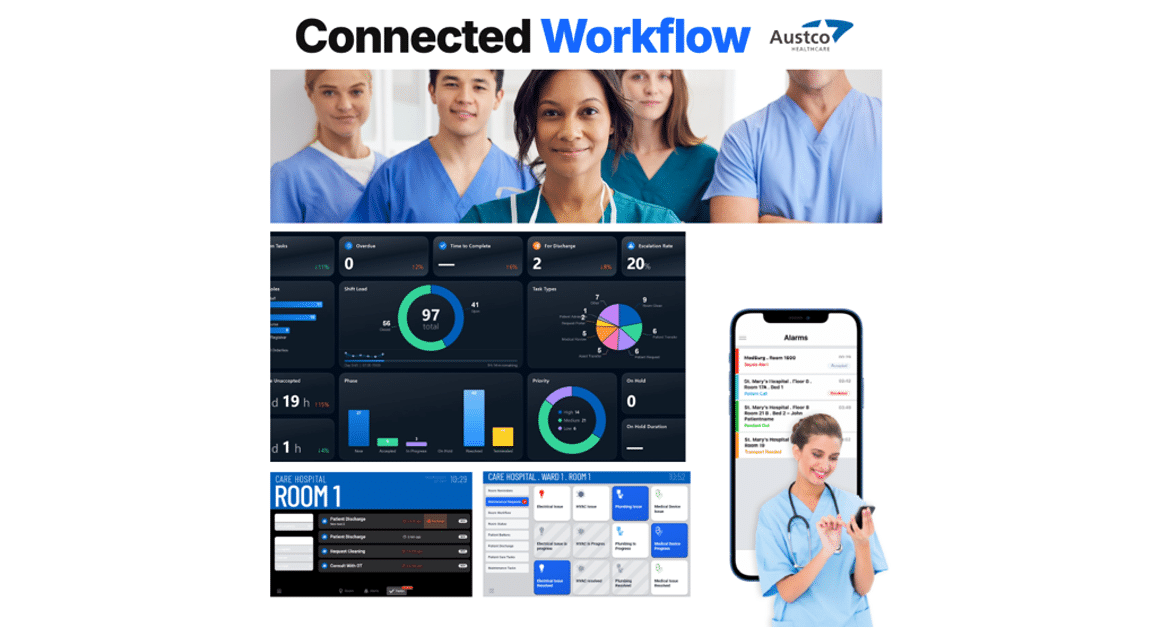
Across the healthcare sector, digital transformation is reshaping how hospitals approach infrastructure, communication and the delivery of care.
Investment in modern facilities and digital technologies creates valuable opportunities. However, introducing new systems is only part of the journey. The greater challenge is ensuring that information can move effectively between the people, departments and technologies involved in everyday hospital operations.
For healthcare organisations, this raises an important question: How can digital technology support better coordination without adding unnecessary complexity to clinical workflows?
From Individual Systems to Connected Healthcare Environments
Hospitals rely on a wide range of technologies to manage patient communication, staff coordination and operational activities.
While these systems perform important functions individually, their wider value can be strengthened when relevant information is accessible across connected workflows.
A more integrated approach can help healthcare teams maintain visibility of outstanding tasks, understand priorities and coordinate activities across departments. The objective is not simply to introduce more technology, but to make existing processes more connected, visible and manageable.
Connecting Clinical Communication with Operational Workflows
Austco Healthcare’s collaboration with Olinqua brings together complementary expertise in healthcare communication, integration and digital operational management.
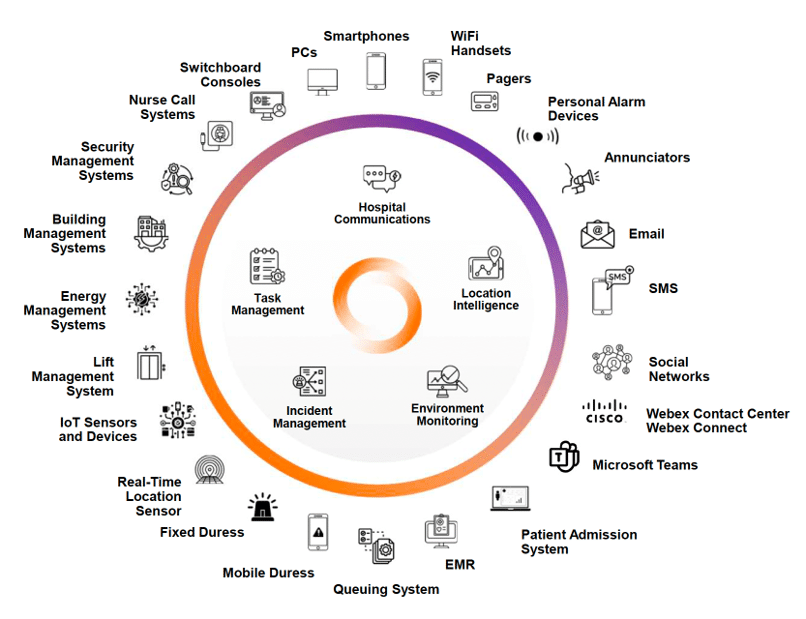
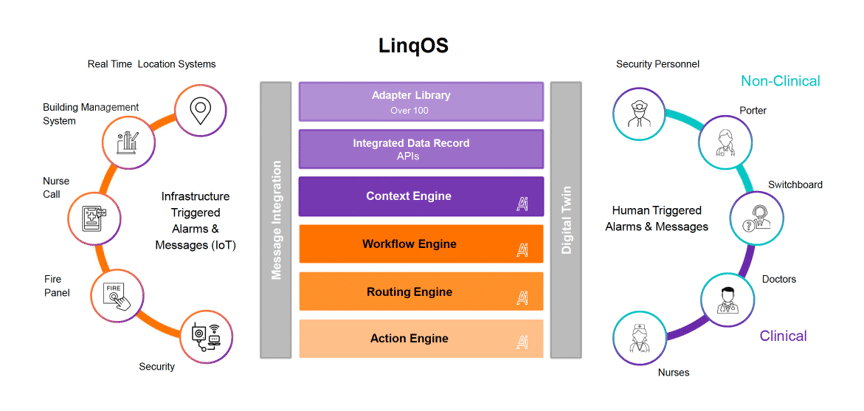
Austco’s clinical communication technology, alongside Olinqua’s LinqOS platform, provides an opportunity to explore how communication events and operational tasks can be coordinated across connected systems.
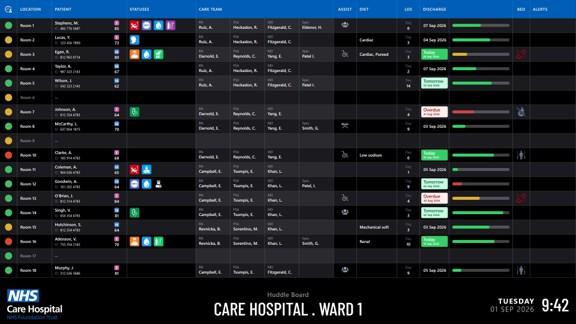
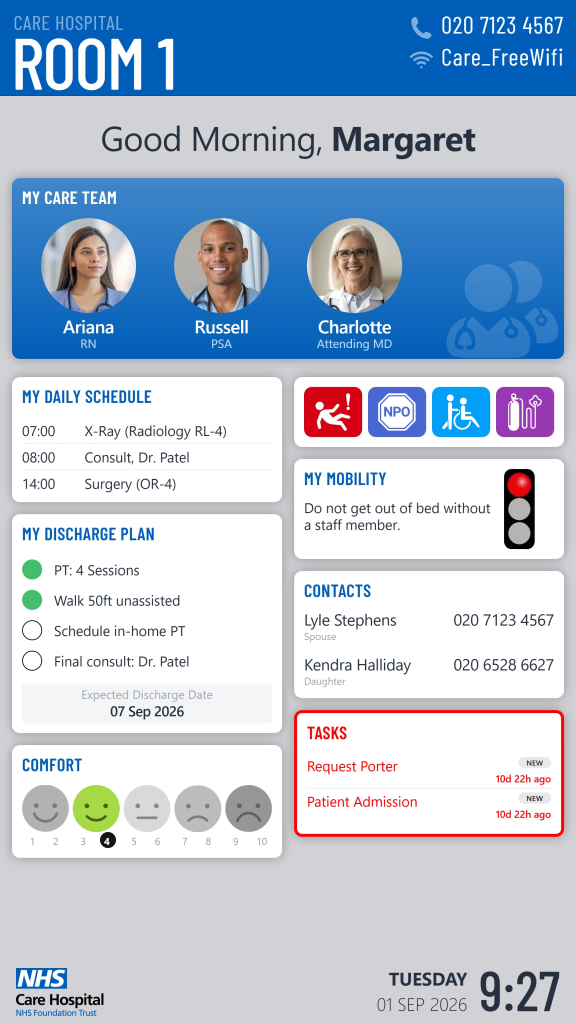
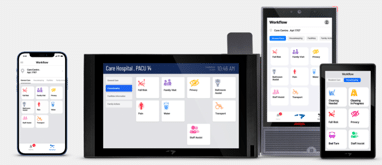
At Austco UK’s Digital Experience Centre, the integration demonstrates how tasks can move between the Austco environment and Olinqua’s task management platform, with relevant information made visible through digital interfaces at the point where the information is needed most.
This approach illustrates how connected technology can support greater awareness of task status, priorities and outstanding activities.
Technology Designed Around Healthcare Teams
Successful digital transformation should consider the people who interact with technology every day.
For nurses, caregivers, facilities teams and hospital managers, access to timely and relevant information is an important part of coordinating daily responsibilities.
Connected communication and operational tools can support clearer task visibility and help teams identify activities requiring attention.
Rather than treating digitalisation as a collection of separate technology investments, healthcare organisations have an opportunity to consider how their systems work together to support practical operational needs.
Looking Towards More Connected Healthcare
As healthcare organisations continue to modernise, interoperability and workflow integration will remain important considerations in digital infrastructure planning.
Through its collaboration with Olinqua, Austco Healthcare is exploring how established clinical communication technology can work alongside digital operational platforms to support more connected hospital environments.
The future of healthcare innovation is not simply about adding more digital systems. It is about making those systems work more effectively together for the people who rely on them.
So what!… we hear you say.
Potential Benefits for Healthcare Organisations
A connected approach to clinical communication and operational workflows offers a range of potential benefits for healthcare organisations, including:
- Improved coordination across departments. Connecting clinical communication with operational task management can help information move between teams, supporting more joined-up working across wards and services.
- Clearer visibility of tasks and priorities. Teams can maintain awareness of outstanding activities, task status and priorities, making it easier to identify what requires attention.
- Information at the point of need. Relevant task information can be presented through digital interfaces where it is needed most, reducing the effort required to find it.
- Shorter response times. Having information wherever needed (including on mobile devices) can reduce unnecessary walking for care teams and this means they can respond faster to alerts, alarms and notifications.
- Less time wasted for the care teams. Reduced time spend walking and reduced time on the phone means care teams can spend more time delivering care. Looking at less screens can save time and reduce frustration for care teams.
- Greater value from existing systems. Rather than replacing technology that already performs important functions, a connected approach can strengthen the wider value of current investments.
- Connectivity without added complexity. The focus is on making existing processes more connected, visible and manageable, rather than introducing additional burden to clinical workflows.
- Support for interoperability and future planning. Integrating established clinical communication technology with digital operational platforms can help organisations prepare for the continued importance of interoperability in infrastructure planning.
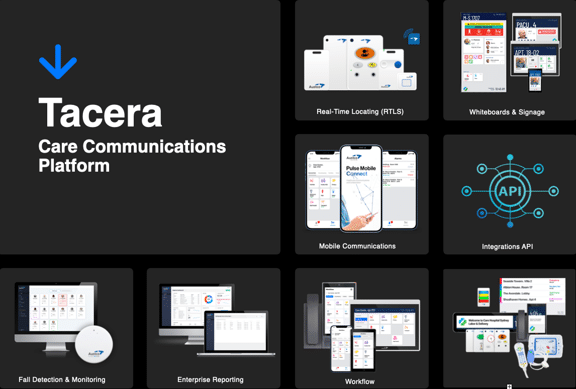
Discover the Digital Experience Centre
Interested in exploring how connected clinical communication and operational workflows could support your healthcare organisation? Contact Austco Healthcare (UK) to arrange a discussion or learn more about the Digital Experience Centre demonstration.
All News and Events